Sunday, March 20, 2011

ORGANIZATIONAL DEVELOPMENT

A.  Introduction

    
     Managing a successful organization  or building up the health of an already established organization -- requires healthy, ongoing leadership and management, planning, product and service development, marketing and financial management. To carry out these practices in a healthy manner, it's important to first understand the basic "territory" in which these practices are carried out.
      These practices are all systems that occur within the larger system of the organization. This is not academic talk -- this is a highly practical point to understand. To truly understand and to be effective at these practices, it helps greatly if leaders, managers and employees have some basic understanding of the overall system of the organization, including its common dimensions, cultures and life cycles. Too often, this basic nature is not understood. Instead, people tend to focus only on the day-to-day events and then when problems occur, they don't see the big picture in order to resolve these problems for the long term. Consequently, they mistakenly focus on what's urgent, rather than on what's important -- if you focus on what's important, you'll reduce what's urgent.

B. General Goals

  • Work effectively with senior management in the organization to plan and implement change and improvement.
  • Provide products and services to the University community to improve performance and effectiveness.
C. Specific Objectives

  • Provide consulting and facilitation expertise that meet or exceed the needs of  Office Administration Student.

  • Enhance the quality of performance management systems ..


  • D. Calendar of Activities


    January 1, 2011                             New Year's Eve Celebration

    February 14, 2011                         Valentines Party

    March 15- 30, 2011                      Sport's Fest

    April 20, 2011                               Summer Vacation in Boracay

    May 7, 2011                                 Anniversary Celebration

    June 15, 2011                               Training for employees

    July 30, 2011                                Motorcade Promoting Development

    August, 2011                                Yearly Workshop for Top Employees

    September 1, 2011                        Charity Works

    October 28, 2011                          Seminars for Managers

    November 12, 2011                      Thanks Giving
          
    December 20, 2011                       Christmas Party


    E. Knowledge and Skills Activities with description and date

    Tuesdays
    Boating  (Optional dinner afterward)
    Meet: 4:00 pm at boathouse
    Location: In Manila Bay, Pasay, Manila
    Leaders: Jennilyn Luzara


    Wednesdays
    Group Study (Optional dinner afterward)
    Meet: 4 pm in parking lot
    Location: Manila Hotel, Manila
    Leaders: Jinno Lumba

    Thursdays
    Mountain Climbing (Optional dinner afterward )
    Meet: 8 am in Mount Samat, Bataan
    Location: Mount Samat, Bataan
    Leaders: Greggy Lucas


    F. Organizational Development Norm
    • Organizational / Personal Pride
      Satisfaction or pleasure taken in ones own or the organization's success / achievements.
    • Performance / Excellence
      Manner or quality of functioning when striving to meet or beat standards of performance. This includes setting personal standards when none are set/ defined.
    • Teamwork / Communication
      The perception that organizational goals and objectives are communicated to and shared by members of the group. The organization has effectively shared it's vision or sense of purpose so that all employees can articulate and subscribe to.
    • Leadership / Supervision
      The style of management / supervision in engaging employees to deliver willingly their best efforts towards organizational goals.
    • Profitability / Cost Effectiveness
      Awareness of employees of their roles and actions to the organizations 'bottom line'.
    • Colleague / Associate Relations
      Personal connections or dealings between or among individuals and groups.
    • Customer / Client Relations
      Personal and group attitude towards clients, both internal (i.e. other departments in the case of service departments) and external suppliers and customers.
    • Innovation / Creativity
      To be aware of, appreciate the need for and strive for new ways of performing a function, process, procedure or the organization's business model in terms of the need flowing from constant changes in the external environment, the need to be competitive and the need to retain customer loyalty and confidence.
    • Training / Development
      The opportunities within the organization and the climate set that promote personal growth and development.
    • Candor / Openness
      The willingness to promote open, honest and direct dialog by all employees at all levels on issues that affect individuals, groups and the organization as a whole. This includes the sharing of information, respect for the diverse backgrounds and experiences of members, the absence of 'competition over territory' and the agreement of goals and levels of performance/ quality.
    G. ACTIVITIES NORMS

    Activities for Collaboration

     TREASURE HUNT    
          Not everyone likes the idea of working as a team. For some, working in a team environment is daunting, for others it's just plain annoying. Creating a treasure hunt that rewards players with fun prizes is an effective lure to get groups to work together, like it or not. An obstacle course can be set in a large recreational park or neighborhood with pitstops along the way from the starting point leading to the end. Divvy teams up in even numbers and issue index cards with directions for the route. Pop trivia such as "Who won the Academy Awards for best actress this year?", math equations and spelling games can be used to link the pitstops. Once the group gets to one stop successfully, they would pick up the next clue and be awarded smaller gifts such as movie tickets, gift cards or even money. At the conclusion of the hunt, award the winners with a catered lunch and invite all participants to attend for a mini awards ceremony to crown the best team.

    Activities for Evaluation

    TEAM BUILDING

          Team-building exercises and activities also provide a wonderful opportunity to bring to life the increasing awareness and interest in 'ethical organizations'. These modern ethical business ideas and concepts of sustainability, 'Fairtrade', corporate social responsibility, the 'triple bottom line', love, compassion, humanity and spirituality, etc., are still not well defined or understood: people are unclear what it all means for them individually and for the organization as a whole, even though most people are instinctively attracted to the principles. Team-exercises and discussions help bring clarity and context to idealistic concepts like ethics and social responsibility far more effectively than reading the theory, or trying to assimilate some airy-fairy new mission statement dreamed up by someone at head office and handed down as an edict. Fundamental change has to come from within, with support from above sure, but successful change is ultimately successful because people 'own' it and see it as their change, not something handed down

    Activities for Recommendation

          With the growing importance of global governance (think climate, environment, financial crisis, diseases, human rights, inequality, information technology, nuclear proliferation etc.) it becomes increasingly important to develop educational approaches that respond to the global challenges, both at the global level and relate to the impact at the local level ….

    Activities for Personal Learning

         Organization Development is a body of knowledge and practice that enhances organizational performance and individual development, viewing the organization as a complex system of systems that exist within a larger system, each of which has its own attributes and degrees of alignment. OD interventions in these systems are inclusive methodologies and approaches to strategic planning, organization design, leadership development, change management, performance management, coaching, diversity, and work/life balance.

    Monday, March 7, 2011

    ORGANIZATIONAL CHANGE

     1.  What type of change(s) at Bayer?
          

    >The plant had changed ownership three times and the workforce seemed to have dissolved as fast as the     analgesic tablets rolling off production lines - down from 800-360 workers in less than a year.  
    > The plant manager post had been vacant for a while
    2.  What type of employee resistance to change did Bayer have to address?
        

    Bayer management realized that given competitive forces and the rate of change in their industry, they needed to streamline operations to have a more secure future in Bayer Corp.'s newly formed Consumer Care Division. 

    3.  What are the positive and negative lessons learned from how change was handled at Bayer?

    The equal treatment of the managers and the employees helped to improve the company. 

    Sunday, March 6, 2011

    ORGANIZATIONAL CHANGE

    More changes at Nokia

     
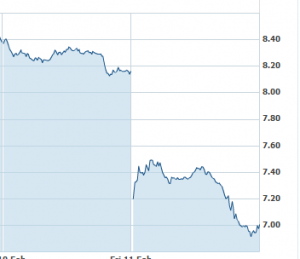
    With Nokia shares tumbling the company has replaced another executive with an ex-Microsoft guy. Chris Webber replaces Mark Louison and heads up the Markets team for North America as of yesterday. Head honcho Stephen Elop is also an ex Microsoft guy but staff in Finland have already walked out in protest, albeit using their flexi-time and presumably not handing in their resignations just yet.

    IBM Changes
    If there's a company that most people are going to name when they think about information technology, I'd say it is IBM. IBM's roots are in hardware, but they've expanded in to software and services to round out the mix. I can't think of an IT skill that wouldn't be in use somewhere within this massive enterprise.
    So it was with interest that I read Robert Cringley's musings that 150,000 employees will be laid off from IBM by the end of this year. I have no inside knowledge about any such plans, but Cringley certainly seems to have a strong opinion on the matter. Of course, it's his job to have opinions. Because of my lack of knowledge, I'm not going to refute any of his original commentary or his follow-up post. Instead, I'm going to highlight some of the 1,000+ comments that his original post generated. In particular, I was most interested in comments posted by those identifying themselves as past or current IBM employees. I think these are very telling about the thoughts and morale of the company.
    "One internal rumor regarding LEAN was that the external consultancy hired to actually perform the analysis was discharged after their principal finding was that IBM is far too top heavy in the executive and management ranks. Not having heard the answer they thought they were paying for, the executives subsequently took ownership of LEAN to pursue the path they had already planned." -- Anonymous IGS Employee
    "I was once proud to wear an IBM badge. I was part of the best technology company around the globe. Since then we have lost our top talent. Our remaining employees come up with reasons they cannot do something versus justing completing work. They are scared to put themselves out their since they are just 1 layoff away from unemployment." -- IBM Employee
    "Those times are long gone. In my CUSTOMER-FACING position, I'm continually embarrassed by our ever-diminishing capabilities and excuses for not just getting the job done. I feel bad for our customers who are getting screwed for the most part." -- IBM Employee X
    "It may take several years, but this lack of management vision and leadership will bite IBM in the end. But for Sam and the other senior execs, they are just lining their golden parachutes and getting ready to leave the mess behind for some other poor sap to try to resolve when the real crap hits the fan." -- Tim IBMer
    "I work at IBM now and it's the most miserable place in the world to be. It's just a pit of despair right now and I'm willing to take a pay cut to get out! I wouldn't wish this on my worst enemy." -- IBMer
    Admittedly every company has its share of angry and frustrated folks and these people are also the ones most likely to make their views known (people really do like to complain). Still, there's a lot of negativity in the 1,000+ comments making it hard to brush these people aside.
    Could Cringley be on the money with this one?

    Apple to bring changes to retail stores

    As the holiday season brings additional shoppers to Apple's retail stores, they'll be making changes to ensure a pleasant experience for the new customers, ifoAppleStore reports.

    First, they're going to ditch the color-coded Starfleet uniform T-shirts, which shoppers have found confusing. Instead, all employees will wear the same color. Next, the handheld checkout devices will be swapped out for specially-equipped iPod touches. A new scanner accessory will interact with point-of-sale software on the iPods. Best of all, employees will be able to accept cash from customers right where the stand, eliminating the often time-consuming walk to the cash register.

    Watch for these changes at an Apple Store near you.


    Sunday, February 13, 2011

    ORGANIZATIONAL CULTURE


    ORGANIZATIONAL CULTURE as a perspective from which to understand the behavior  of individuals and groups within organizations has its limitations:
    1.         It is only way to view organizations.
    2.      Like so many concepts, organizational culture is not defined the same by any two popular theorist or researchers.  Some of the definitions of culture describe it as:
    a.       Symbols, language, ideologies, rituals, and myths.
    b.      Organizational scripts described from the personal scripts of the organiztion’s founder(s) or dominant leader(s).
    c.      A product; historical; based on symbols; and an abstraction from behavior and the products of behavior.
    Organizational Culture is what the employees perceive and how this perception creates a pattern of beliefs, values, and expectations.
    3 Layers of Organizational Culture
    LAYER 1.  Includes artifacts and creations that are visible but often not interpretable.
                Ex. Annual report, newsletter, dividers between workers and furnishings.
    LAYER2.  Are values, or the things that are important to people.  Values are conscious affective desires            or wants.
    LAYER3.  Are the basic assumptions people make that guide their behavior. Included in this layer are assumptions that tell individuals how to perceive, think about and feel about work, performance goals, human relationships and the performance of colleagues.
    Organizational Culture and Societal Value Systems
    Organizations are able to operate efficiency only when shared values exist among the employees.


    VALUES.
    - are the conscious, affective desires or wants of people that guide their behavior.  An individual’s personal values guide behavior on and off the job.  If a person’s set of values is important, it will guide the person and also promote consistent behavior across situations.
    - are society’s ideas about what is right and wrong such as the belief the hurting someone physically is immoral.
    - are passed from one generation to the next and are communicated through education systems, religions, families, communities, and organizations.

    Organizatonal Culture and its Effects
         Because organizational culture involves shared expectations, values, attitudes, it exerts influence on individuals, groups, and organizational processes.
         For example, members are influenced to be good citizens and to go along.  Thus, if quality customer service is mportantin the culture, then individuals are expected to adopt  this behavior.  If, on the other hand, adhering to a specific set of procedures in dealing with customers is the norm, then this type of behavior would be expected, recognized and rewarded.
    The impact of Culture on employees indicate that:
    1.         It provides and encourages a form of stablity.
    2.      Sense of organizational identity.
    3.      A culture can generate a sense of loyalty and commitment.
    A strong culture is characterized by employees sharing core values, the stronger the culture is the more influential it is on behavior.


    Creating Organizational Culture
    The Core of a Positive Culture
    Methods
    ·         A sense of history
    ·         Communications
    ·         Positive problem solving                          -> A historical
    ·         Stories about founders and leaders           foundation

    ·         Leadership
    ·         Role Model examples
    ·         Norms                                                          -> An understanding
    ·         Expectations                                                 of what is
    ·         Values                                                                        expected                                 Cohesive
       Organizational
    ·         Reward Systems                                                                                          Culture
    ·         Career Management and job security
    ·         Recruiting and staffing                                -> Being a part
    ·         Socializations of new staff members            of a group
    ·         Training and development

    ·         Member contract
    ·         Participative decision making                    -> Encourage
    ·         Intergroup coordination                              interpersonal and
    ·         Personal exchange                                      intergroup relationships


    Types of Culture

    BUREAUCRATIC CULTURE – An organization that emphasizes rules, policies, procedures, chain of command and centralized decision making has a bureaucratic culture.  Some individuals prefer the certainty, hierarchy and strict organization of such a culture.

    Ex.  Military, Government agencies and firms started and managed by autocratic  managers.

    CLAN CULTURE – Being a part of a working family, following tradition and rituals, teamwork, spirit, self-management and social influence are characteristics of the clan culture.  Employees are willing to work hard for a fair and equitable compensation and fringe benefit package.  In a clan culture, employees are socialized by other members.  Members help each other celebrate success together.

    ENTREPRENEURIAL CULTURE – Innovation, Creativity, risk taking and aggressively seeking opportunities illustrates an entrepreneurial culture.  Employees understand that dynamic change, individual initiatives, and autonomy are standard practices.  Employees are encouraged and given autonomy to work on projects.

    MARKET CULTURE – An emphasis on sales growth, increased market share, financial stability, and profitability are attributes of a market culture.  Employees have a contractual relationship with the firm.  There is little feeling of teamwork and cohesiveness.

    Influencing Culture Change

         Changing an organization’s culture takes time, effort and persistence, especially in firms with strong cultures.  Older strong culture organizations have established stories, use symbols, conduct rituals, and even use their own unique language.  In a strong culture organization, the core values are widely shared, respected, and protected.


    Experimental Exercise Testing Culture Knowledge
    Objectives:
    1.        To test your understanding of cultural differnces
    2.      To compare your understanding and international experiences with classmates.
    Starting the Exercise
    1.        Each student should complete the seven-category survey.
    2.      Score your individual answres with the answer key.
    3.      Form into groups of five or six and compare international experiences.  Did individuals with more international experinces score better?
    4.      With the group, discuss steps that could be taken to improve individual knowledge of cultural differnces.
    GOING GLOBAL?  TEST YOUR BUSINESS ETTIQUETTE KNOWLEDGE
    (SOME QUESTIONS HAVE MORE THAN ONE ANSWER)

    1.         During business meetings, use first  names in
    a.      Great Britain, because everyone is so chummy
    b.      Australia, because informality is rule
    c.      China, because the first name is the surname
    d.      Japan, because the last names is are easy to mispronounce.

    2.      In China, offer expensive gifts to your hosts
    a.       Everytime they ask for one.
    b.      When you need help getting out of the country.
    c.      Never. If they can reciprocate it, they’ll lose face.

    3.      In which country is a business card an object of respect?
    a.      Japan.  An executive’s identity depends on his employer
    b.      Taiwan. It explains a person’s rank and status.
    c.      France. Especially card’s describing a man’s experience.

    4.      When doing business in Japan, never
    a.      Touch someone
    b.      Leave your chopsticks in the rice.
    c.      Take people to pricier restaurants than they took you to.
    d.      All of the above.

    5.      Power breakfasts are inappropriate in all but
    a.      Italy.  The natives like to bring the family along
    b.      Mexico.  People don’t bother to get to work till 10am anyway
    c.      United States.  We invented them.
    d.      France.  People are at their most argumentative in the morning.
    6.       In some countries, colors are key.  Which is true?
    a.       For Koreans, Writing a persons name in red signifies death
    b.      In China and Japan, gifts wrapped in white and black should only be presented at funerals.
    c.      Purple suits in Great Britain represent Lack of taste

    7.        Which of this choices are obscene gestures?
    a.       The Okay sign in Brazil.
    b.      A hearty slap on the back in Switzerland.
    c.      Doing anything with the left hand in Saudi Arabia
    d.      Thumb between second and third finger in Japan.


    BSOAD-OM 3C
    GROUP B1
    -Luzara, Jennilyn
    -Lumba, Jinno
    -Lucas, Greggy
    -Lazo, Beverly
    -Murillo, Elizabeth
    -Relacion, Jenneth
    -Perdido, Rosemarie

    Monday, January 3, 2011

    CHRISTMAS FOR SALE

    Human behavior in an organization determines the quality of work, progress and success of the organization. No machine and no computer can work by itself. No product is developed and manufactured by itself. It's the workforce or rather the human resources of an organization who develop ideas, create new products and services and then deliver them to the markets. Thus, it is important for the management of an organization to analyze the behavior of its entire work force. Human performance consulting is in vogue today, thanks to the greater emphasis on the psychology of the people behind the desk.

    Every organization differs from the other with respect to its policies, work environment, recruitment process, job evaluation and culture. The most natural human tendency is to react positively and with great intensity where they are compensated well, encouraged well and get additional perks and holidays. In no way is it being suggested that an organization should overpay its staff. However, it must be kept in mind that the organization must treat its work force with immense dignity and respect and provide sufficient compensation. Even make the cleaning staff in your organization feel special and encourage them to do their task in the best possible way! The work force must be treated as an asset, not a liability, and once this is done you will notice remarkable change in the collective human behavior.

    Apart from the internal environment of the office, the external personal environment plays a major role in his/her behavior and attitude. We are social animals with unique aspirations, hopes, insecurities. Only those who enjoy their work can have a healthy balance between personal and professional life. Those who don't enjoy their work will most likely not be satisfied with the work nor be content in their personal life due to the imbalance that exists.

    One important way to analyze human behavior is to study the relationship effectiveness. How effectively your staff communicates and relates to each other can tell you how much they care for their work and the people around them. Without proper training the office dynamic can become imbalanced just like any natural system.

    It is not likely for an accountant or a biologist to sit and study human behavior effectively. You must have trained experts who understand the unique challenges the workplace brings. Not everybody is gifted with the skill to foresee a person's behavior beforehand. JM Perry, through his coaching packages, helps develop these skills inside organizations. You can have professionals attending one-on-one sessions or learning through live chats or audio-video CDs.  After completing Perry’s coaching you will be able to comprehend how to analyze human behavior and how to improve your behavior.